
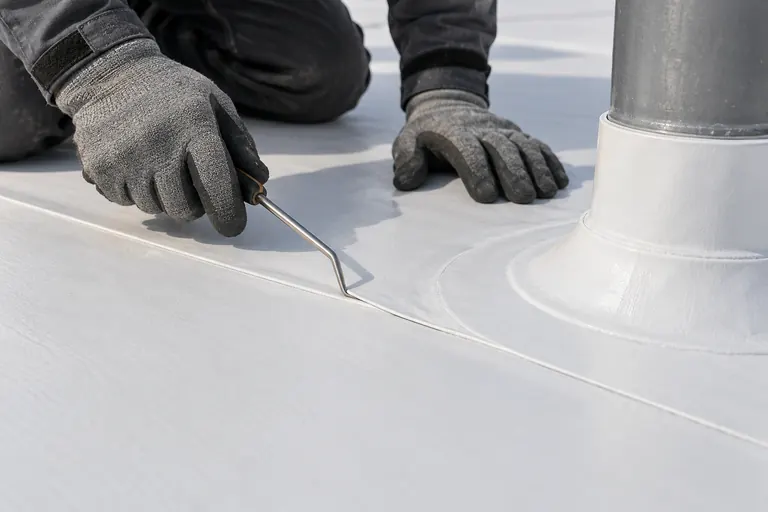
A temporary repair stops or diverts water during or right after a storm, often by clearing drains and sealing or covering the opening. A permanent repair comes after the cause is found and the roof is dry: the damaged area is repaired with materials matched to the existing roof, flashing is restored, and the work is documented.
Why storm leaks get a temporary fix first
In the rain, a crew can usually stop or divert water, but most permanent membrane and flashing repairs need a dry, clean surface so the materials adhere as the manufacturer requires. The cause may not be confirmed yet, either: on a flat roof, water often travels under the membrane before it shows up inside.
Peninsula storms also tend to come in runs. NOAA's 1991–2020 normals for Redwood City show about 19 inches of rain a year, 86% of it November through March, with December and January the wettest months. The coast gets more: Half Moon Bay averages about 26 inches, and SFO about 19.6. Dry windows between storms are when permanent repairs get done.
Is it safe to wait for the rain to stop?
Usually not. While you wait, water can soak insulation, ceilings, electrical fixtures and tenant property, and wet insulation keeps causing damage after the storm. Make the area safe, catch the water, and call a roofer during the storm. A temporary repair can stop or divert water, and the permanent fix follows once it's dry.
Don't send staff onto the roof in rain, wind or the dark. For the first steps inside the building, see what to do in the first 24 hours of a flat roof leak.
What a temporary repair usually is
- Clearing drains and scuppers so water can leave the roof.
- Covering or sealing the opening with a material compatible with the existing roof.
- Diverting water away from the entry point.
Compatibility matters. The wrong sealant on a membrane can make the permanent repair harder. A temporary fix also has no set lifespan, so it shouldn't be treated as the final repair.
What makes a repair permanent
- The cause is traced and documented, not just the spot above the stain.
- The repair matches the existing membrane and follows the manufacturer's requirements.
- Flashing and seams are restored.
- Photos before and after.
If the roof is under a manufacturer warranty, repairs may need to follow the manufacturer's rules, so check the warranty before the permanent repair. More on commercial roof leak repair.
Sometimes repair isn't the answer. Repeated leaks, wet insulation or widespread seam failure point to a replacement or restoration discussion.
What to ask the crew after the first visit
- What did you find, and what did you do?
- Is it temporary? What's the permanent fix, and when can it be done?
- Can I have the photos?
- Does the permanent repair need a permit? Rules vary by city, and San Mateo County cities each have their own (see commercial roofing in San Mateo County and Redwood City).
Keep the notes and photos from each visit for the owner, tenants and your insurer.
Reducing the next emergency
- Fall drain and scupper checks, before the first storms.
- A flashing review at walls, curbs and penetrations.
- A roof condition report (ours is free) and a preventive maintenance plan.