
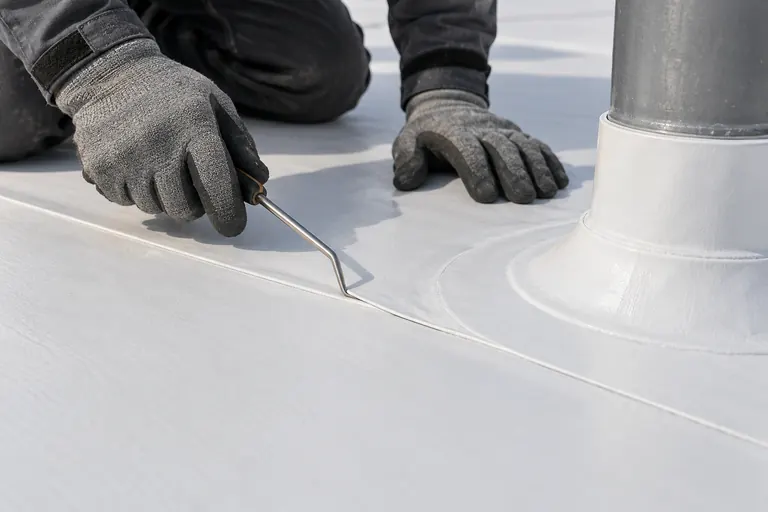
Get people and electrical equipment clear of the water, catch it with buckets or plastic, and photograph everything. Don't go up on a wet roof. Then call a commercial roofer with the building type, roof access and photos. A roofer can usually make a temporary seal, and the permanent repair follows once the roof is dry.
First hour: make it safe
- Clear people from under the leak and keep water away from light fixtures and electrical panels. If water is near electrical equipment, shut off power at the breaker only if it's safe to do so; otherwise call an electrician.
- Catch and divert the water with buckets, plastic sheeting and a wet vac. Move inventory and tenant property out of the way.
- Don't send staff onto the roof in rain, wind or the dark. Wet membranes are slippery. Leave the roof to a roofer.
Hours 1–4: document everything
Photograph the ceiling stain, dripping water, wet floors and damaged contents, with something for scale, plus a wide shot showing where the leak is in the room. Note the time, the weather and the affected units. Keep the photos for the roofer, the owner or board, and your insurer before anything is cleaned up.
- Keep a simple log: when it started and stopped, and whether it leaks only in wind-driven rain or in any rain. That helps find the cause.
- Tell affected tenants or owners what's happening. Check the lease or CC&Rs for who handles roof repairs.
- Notify your insurer or broker if you plan to make a claim. Check your policy for what it requires.
- Find the roof warranty. Some manufacturer warranties have notice terms, so check the notice clause before anyone works on the roof.
Call a commercial roofer: what to tell them
For commercial roof leak repair, the call goes faster when you have:
- The building type and the roof type if you know it (TPO, PVC, modified bitumen, built-up or a coating).
- Roof access: a hatch, a ladder or interior stairs.
- Where the water is showing inside, and your photos.
Hours 4–24: the temporary fix
Usually only a temporary repair is possible in the rain. A roofer can often stop or divert water by clearing drains and scuppers and adding a temporary seal or cover. A lasting repair needs a dry, clean surface matched to the existing membrane, so the permanent fix normally comes after the storm, once the cause is confirmed.
The first suspect often isn't the leak. On a flat roof, water often gets in at one point, such as a seam, a flashing, a drain or a penetration, and then travels under the membrane or along the deck before showing up inside. That's why roofers trace the path from the stain back to the entry point instead of patching right above the stain. For when to wait and when to act, see temporary vs. permanent roof leak repairs.
Does the repair need a permit?
It depends on your city and the size of the repair. Some Bay Area cities require a permit for roofing repairs unless an exemption applies, and others only above a size threshold. San Jose, for example, exempts repairs under 25% of the roof that don't involve framing, done no more than once in 12 months; at 25% or more, a building permit is required (San José Building Division Bulletin #201). Your roofer should confirm the local rule before the permanent repair starts.
Larger repairs and recoats can also cross the Title 24 cool-roof threshold; our Title 24 re-roof guide explains when. County notes: Santa Clara, Alameda, San Mateo, Contra Costa and Santa Cruz.
After the storm: stop the next leak
- A fall check of drains and scuppers (drainage and flashing).
- Flashing at walls and curbs.
- A roof condition report (ours is free) and a preventive maintenance plan.
Most Bay Area rain falls from November through March: about 85% of the yearly total at San Francisco International Airport and 86% at Redwood City (NOAA NCEI 1991–2020 normals). Schedule checks in early fall.
In Oakland? See our Oakland flat roof leak guide.
Sources
- NOAA NCEI, U.S. Climate Normals 1991–2020 (San Francisco International Airport USW00023234; Redwood City); Nov–Mar shares computed from the monthly values
- San José Building Division, Bulletin #201 (roof repair permit threshold)